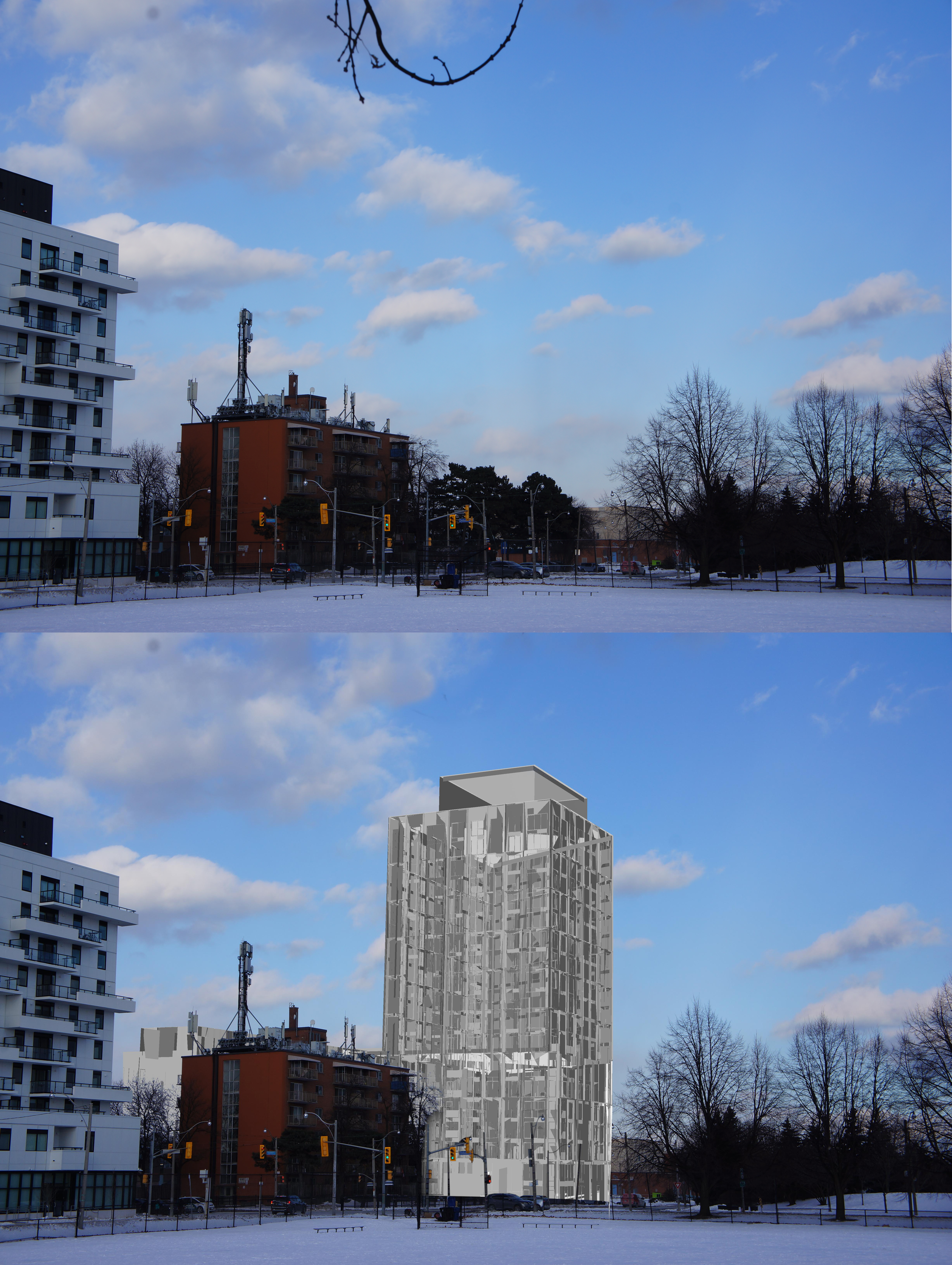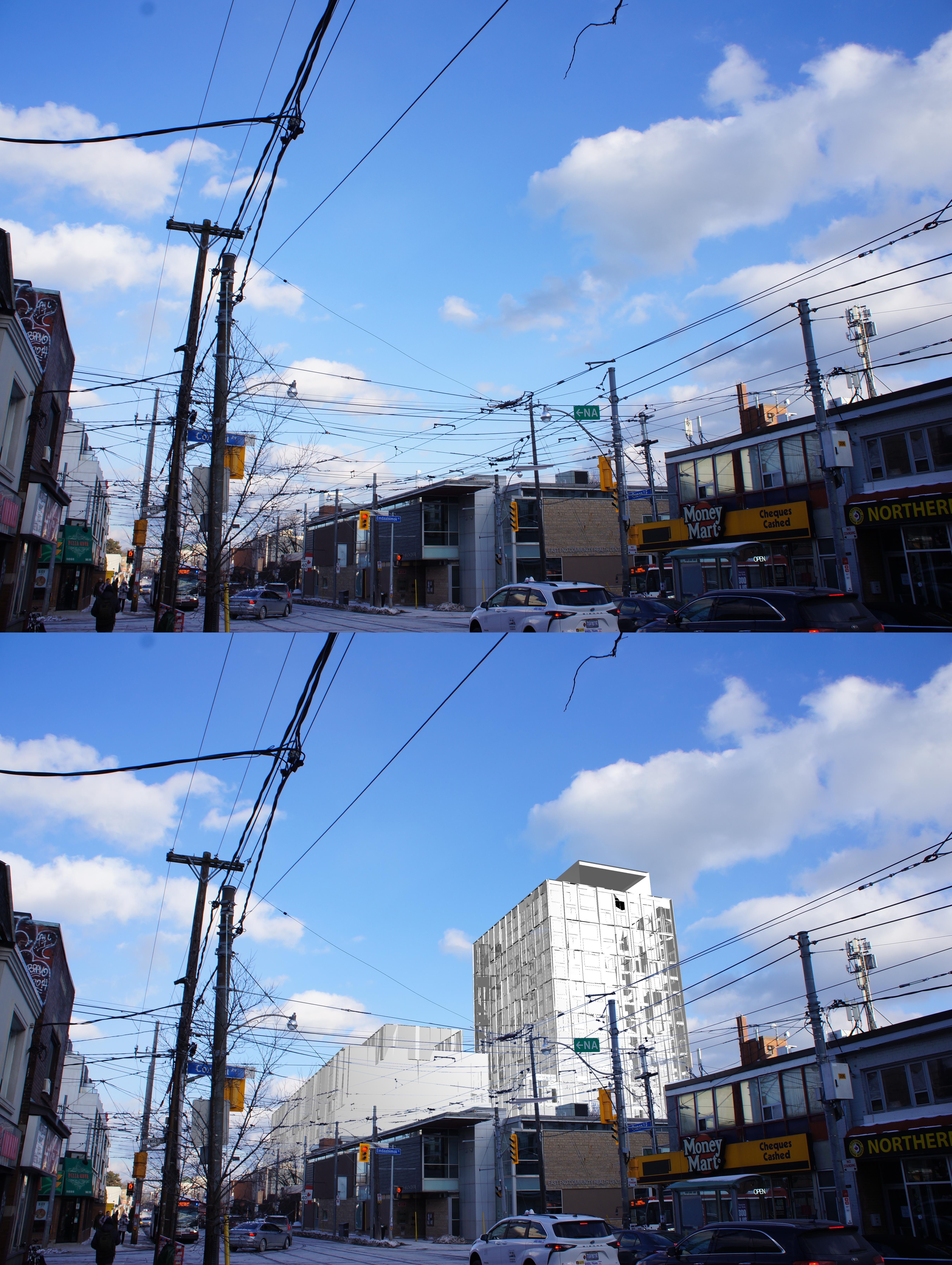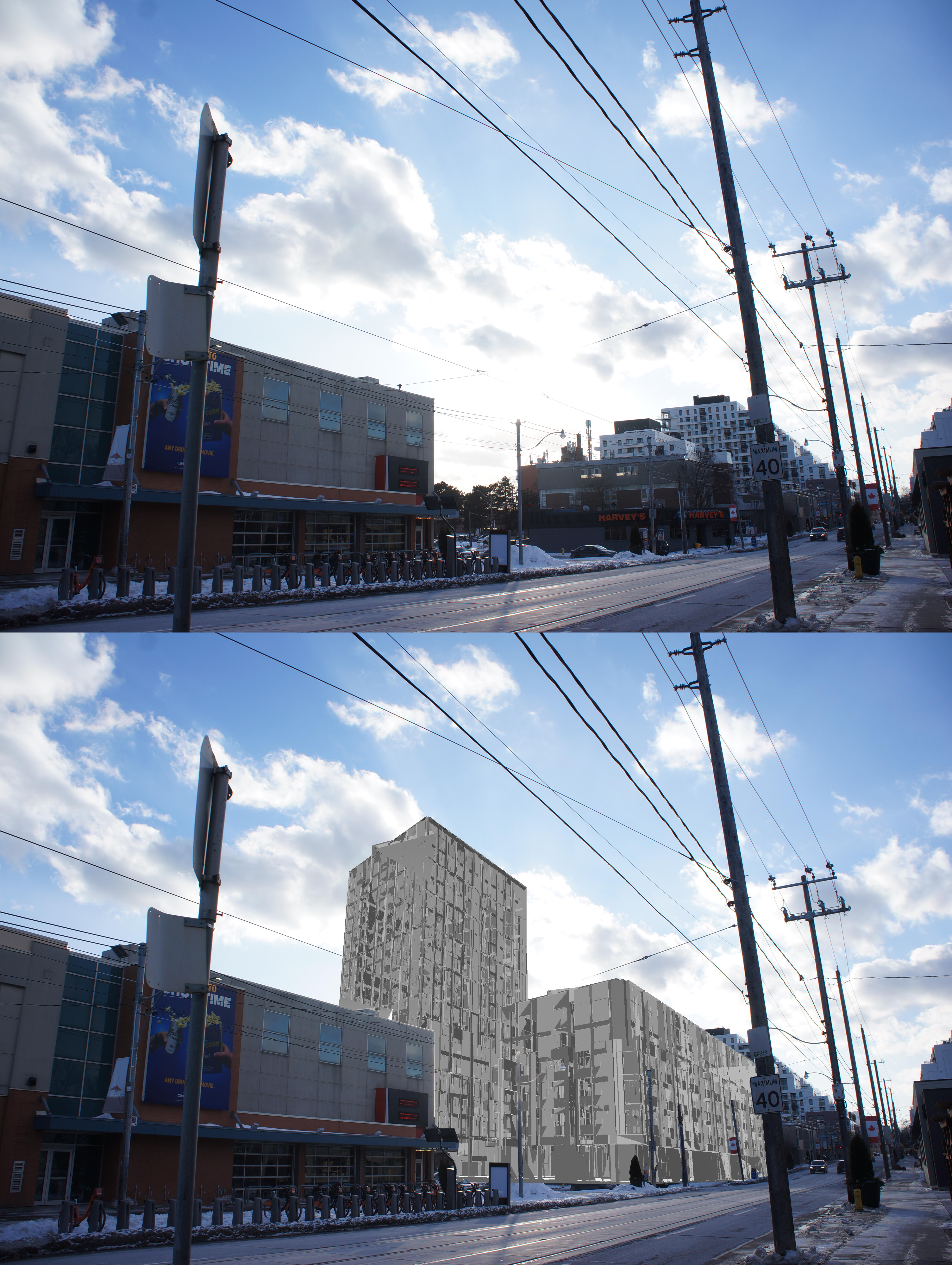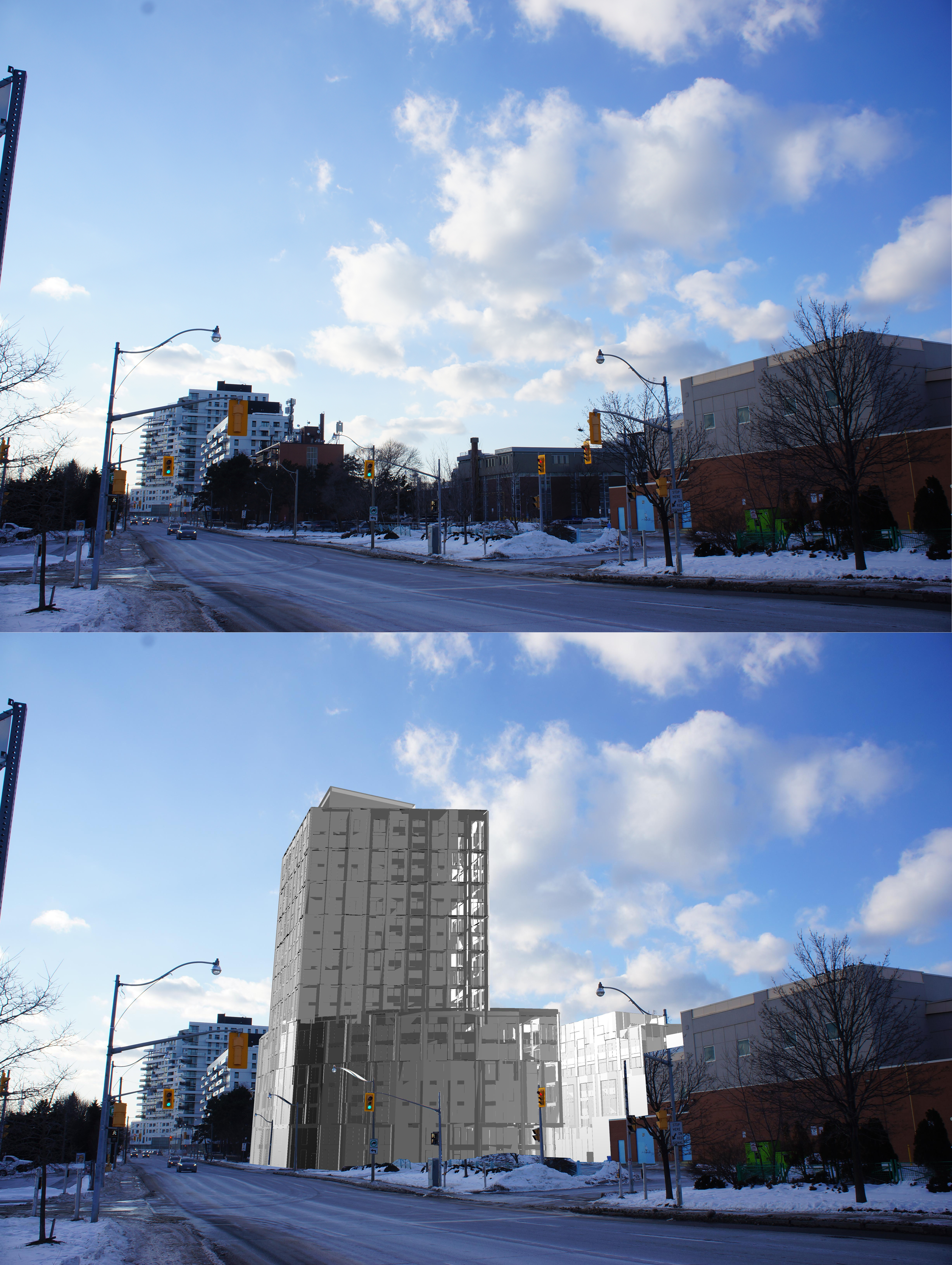
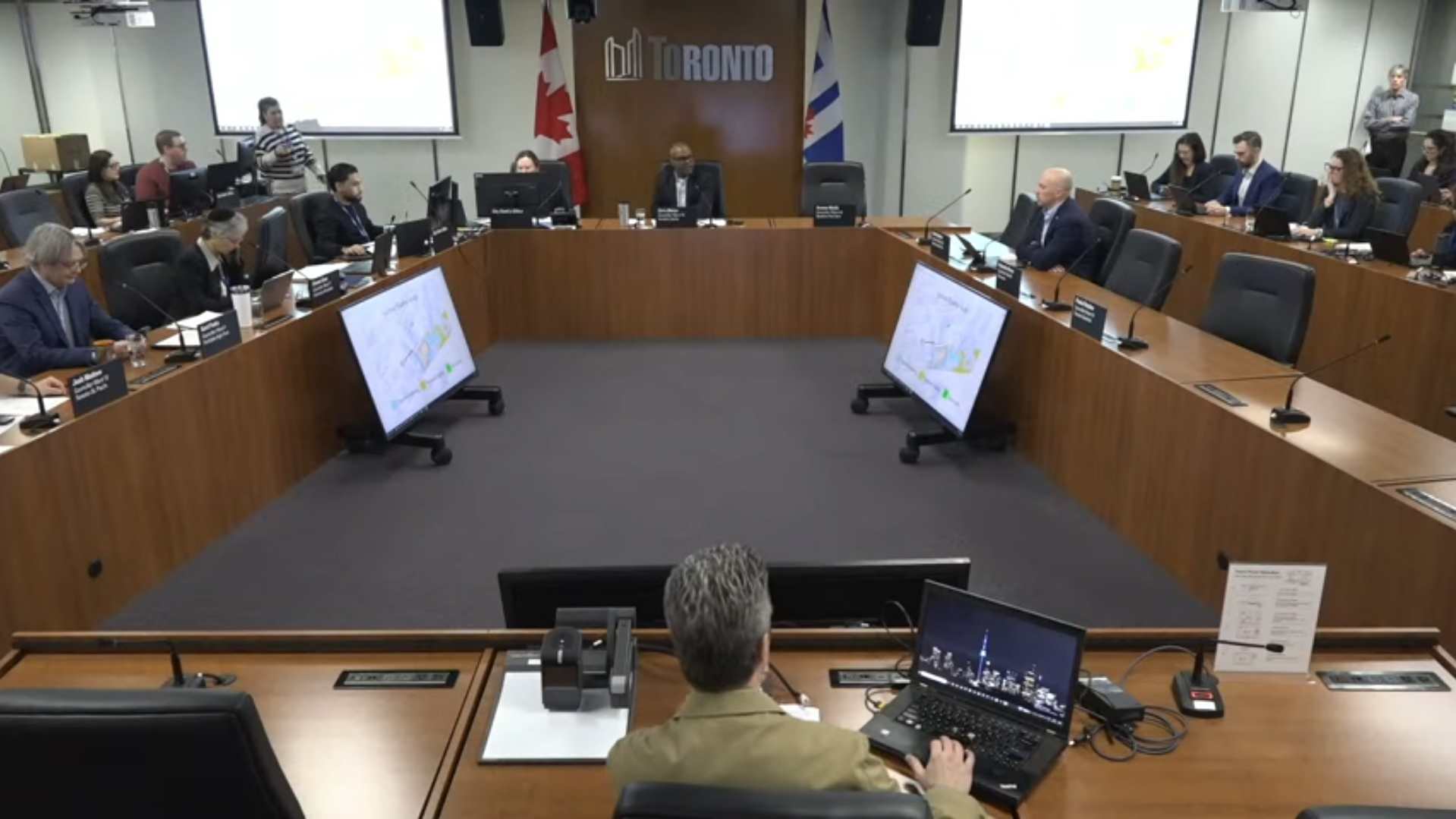
It was another bang of my head against a brick wall in my latest deputation at the Toronto and East York Community Council. No amount of information or statistics seem to matter, it’s a rubber stamp committee. I don’t know why they don’t just end the farce and let the public know these decisions are a fait accompli and there’s no point to deputing.
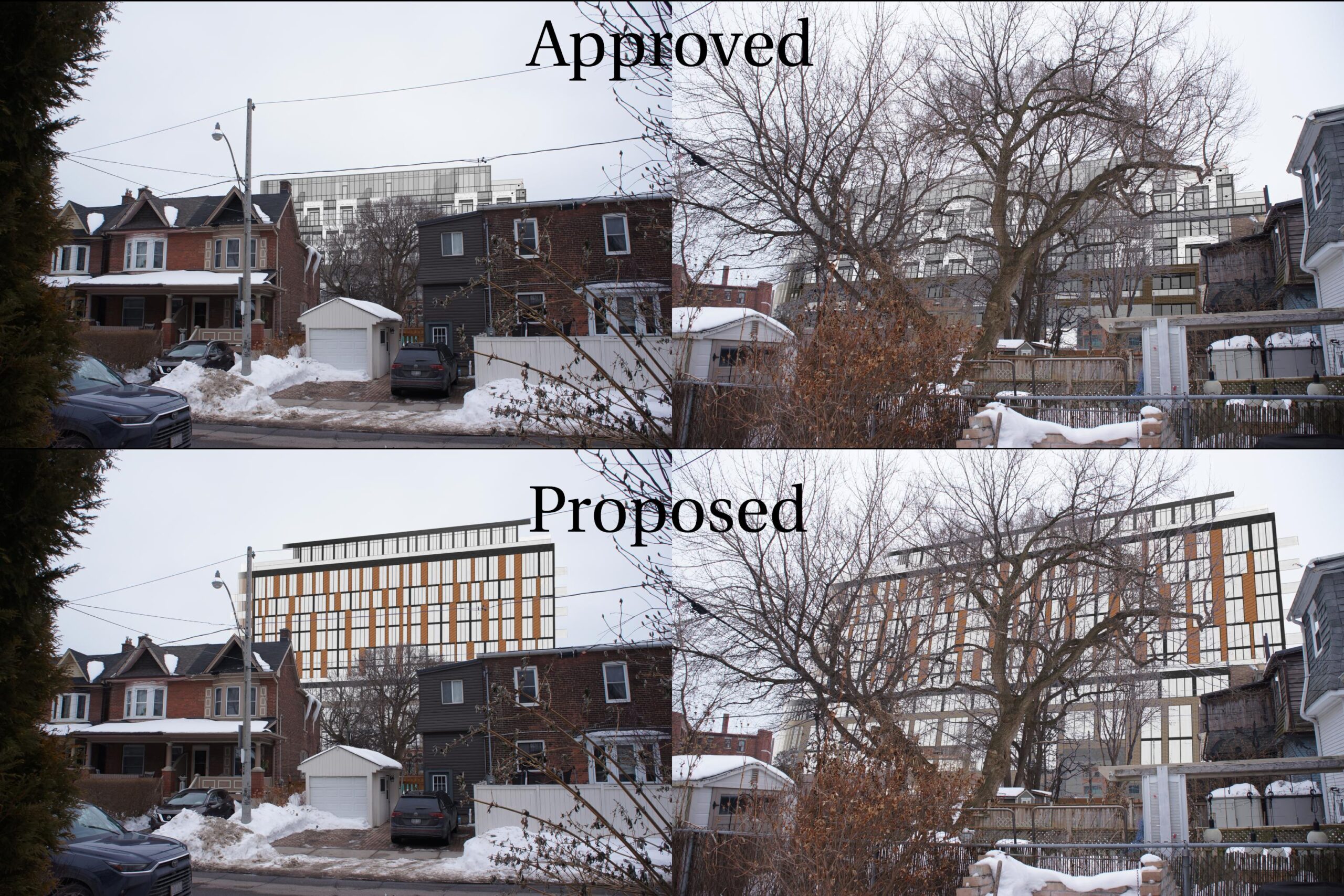
This time I even got into the measurable impacts on the shadowing of the houses to the north, one of which is going to pretty much lose all their sunlight in the colder months. No one cared.
Here is my full deputation with sources:
Hello, my name is Adam Smith, resident of Beaches East-York.
6 years ago the application for 1684 Queen E was approved and conformed to the Queen E urban design guidelines. Had that been built I would not be here. Instead, they demolished a Day’s Inn doubling as a women’s shelter, closed Murphy’s Law bar, dug a massive hole in the ground… and then sat on the property until it was no longer economically viable in its approved form. After leaving a dangerous, ugly, and poorly fenced pit in the ground for 5 years is this committee prepared to allow the first private developer to go beyond 6-storeys?
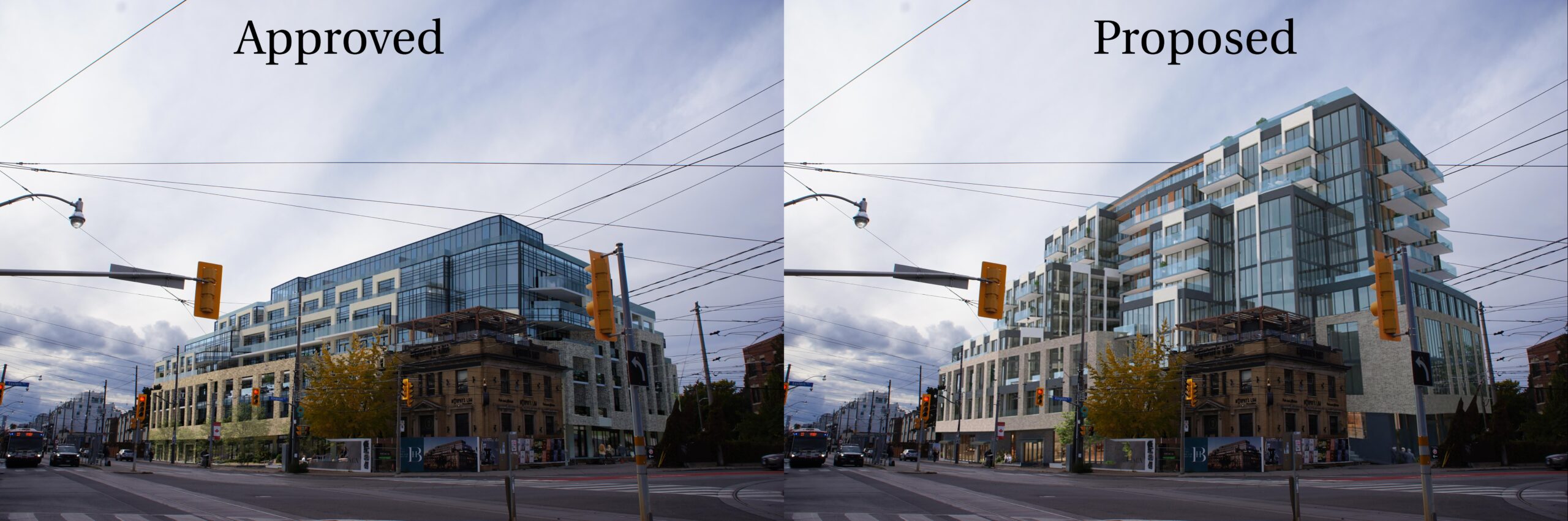
This application is slightly better, 10 storeys instead of 11 and better setbacks on the front, but still violates the guidelines and the expectations of many residents. The planning report from staff says it “meets the intent of the guidelines.” If the intent was to have buildings greater than 6-storeys, the UDGs would have mentioned that. I ask the committee: are residents allowed to know what can be built in their neighbourhood? Or does anything go?
Many locals enjoy seeing the sky and walking in the sun, if Beaches residents wanted to be hemmed in by tall buildings they wouldn’t have moved here. The north side doesn’t have the setbacks of the approved design and creates a shadow over twice the length, greatly overshadowing backyards to the north. (start slides) Here are the shadows of the approved design in blue… and here are the shadows of the latest design in orange. As you can see, some of the green backyards are going to lose sunlight for more than 5 hours, and the poor people at 5 Orchard Park blvd are reduced from about 5 hours of sunlight, one hour of which is almost full sun, to a tiny sliver for an hour. While the mid-rise guidelines mention 5 hours of sunlight at the equinoxes for public realm, it also mentions minimizing shadowing of private open spaces.
I personally feel this building to be just another boring, boxy, bland stack of cubes just like the majority of new builds out there and does not complement the heritage building of Murphy’s Law. I was surprised to find that planners on a thread on UrbanToronto.ca feel the same.
There is no indication of just how many units will be affordable, and the last thing this city needs is more unaffordable market rate rentals.
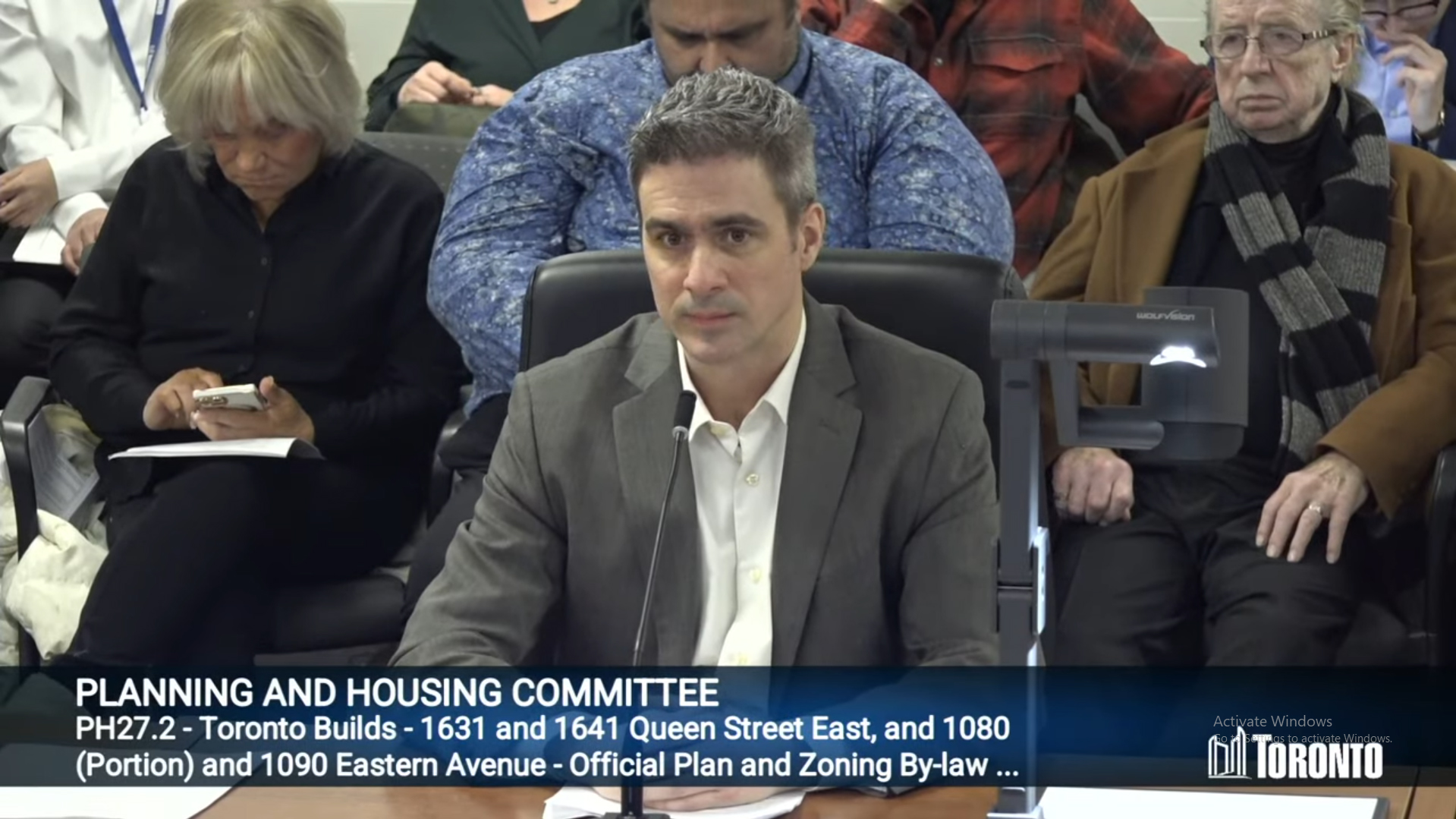
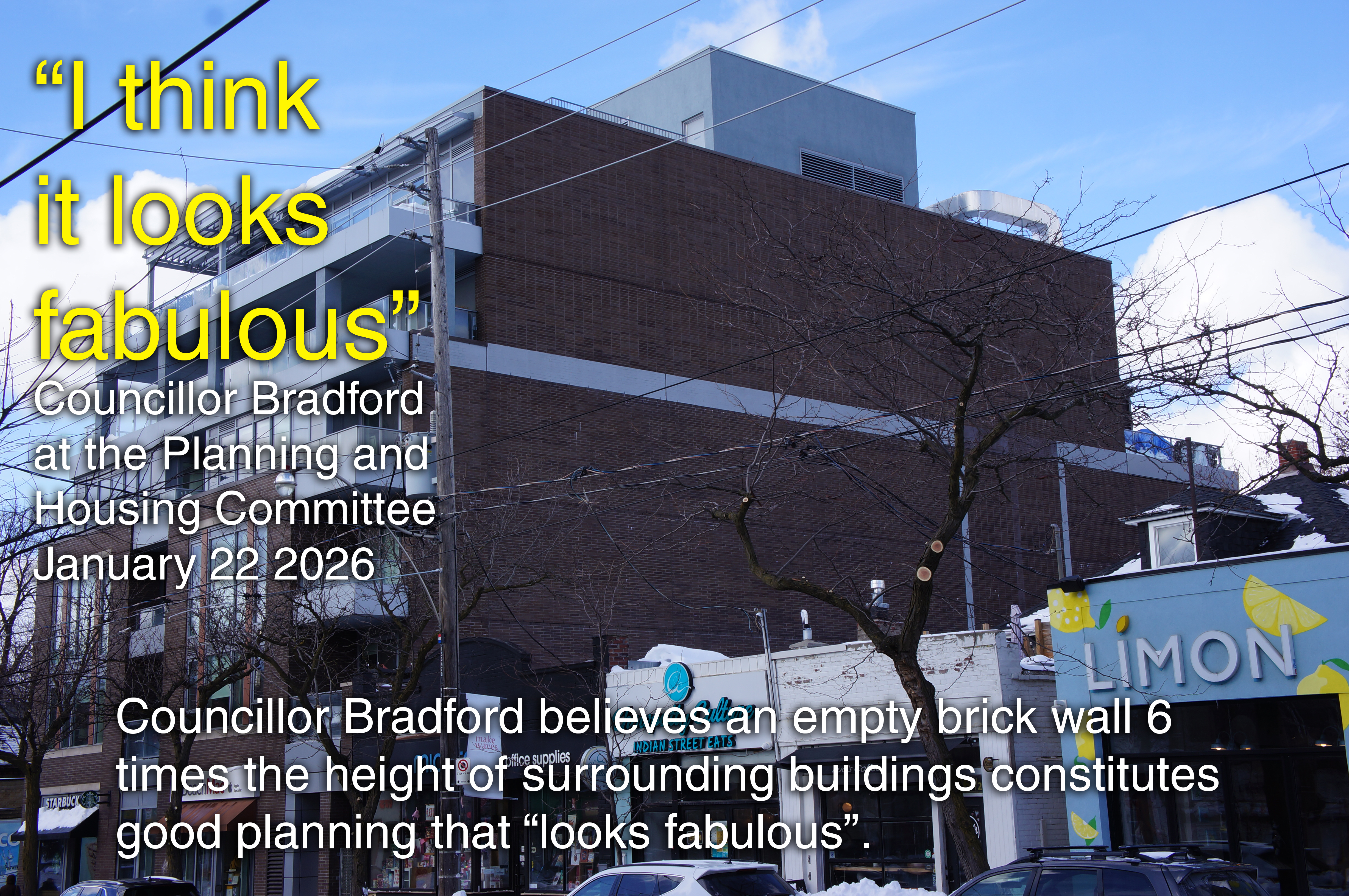
Regardless of being created 14 years ago, the Queen East guidelines are a legally recognized document that council approved, and as of today are still a part of the Official Plan. At the Jan 22 Planning and Housing Committee Councillor Bradford said expecting these guidelines to be respected is “misinformed at best or maybe even misleading at worst” but as council has not seen fit to remove these guidelines from the Official Plan you can forgive residents for having the reasonable expectation that the existing guidelines still apply. They are called guidelines for a reason, they aren’t called the Queen St E wishful thinking, or the Queen St E exercise in futility. The only thing misleading seems to be council misinforming residents by having the guidelines included in the Official Plan.
Councillor Bradford also mentioned the “provincial planning statutes that the city is statutorily required to comply with” but what policy is he specifically referring to? Even the most recent 2024 Mid-Rise guidelines limit the height of the building to the right of way width. This is the same province that doesn’t allow resident representation at the OLT, removed rent controls on newer buildings, weakened heritage considerations, swept away development fees, limited conservation authorities, eliminated requirements for shadow and wind studies and urban design, overrode globally recognized municipal green-building standards, and is now removing affordable housing requirements at major transit station areas. Does any of this sound like good planning principles we should be adhering to or resisting?
No information or statistics seem to matter. No one is willing to address that the area has already greatly increased in density, or that this is not a transit hub, or the lack of amenities and youth program space, or the closest elementary school is fully at capacity, or that Canada just depopulated and over 200K units are going to be vacated the next 30 years as the Boomers move on. (see my previous deputation for more info)
So I’m going to introduce some new facts. When you take into account the demolition, excavation, construction, and all the embodied carbon of the materials, development is the largest source of carbon emissions in the city, a fact the city hides by exempting those emissions. Yet ironically we claim to be in a climate crisis.
Because our stormwater infrastructure is overloaded, new builds have to include massive storage tanks in their basement, an unproven experimental measure. For this development the basement storage tanks weren’t enough, they also needed rooftop storage.
The current development frenzy is not just about profits. Canada is one of the highest percentage of housing to GDP in the OECD, more than double the average. Senior governments are using development in a desperate ploy to prop up flagging economic growth. We’ve been putting too many housing eggs in the economic basket, and those chickens are coming home to roost, as evidenced by the glut in the condo market and falling housing prices. The demand isn’t there, which is why development after development keep failing, leaving other empty holes in the ground, and yet we keep approving more?
None of this is building towards a sustainable future, quite the opposite, and it’s time council acknowledged it. If the developer can’t make enough money to build within the guidelines they should hand it over to the city for a 100% public 100% affordable building. Thank you for your time.
Adam Smith, 21st Century